Tuesday, April 2, 2013
A Crude Attempt to Statistically Determine Baseball's Best Player for both Pitchers and Hitters
I was bored at work, and with the 2013 MLB season starting, I wanted to go back and see if I could statistically quantify last year's MVP race (and eventually the Cy Young race). As many know, Miguel Cabrera won the MVP voting, as much as the stat geeks/sabermetricians/general managers disagreed.
(For a Glossary behind the stats being used, see: http://www.fangraphs.com/library/ )
I started with the basis that no one stat is perfect (ESPN has fetishized WAR to the point of no return, but then again, ESPN is the worst example of sports journalism pretty much ever). From here, I basically took a basket of accurate and well-supported advanced stats among the baseball community, and assigned a percentage to them in how they would eventually weigh on the final evaluation. This percentage was based roughly on accuracy and general support among statisticians.
Pitching
For pitching, I came up with the following formula to determine how good a player was:
SIERA (25%) WAR (30%) WPA/LI (15%) WPA (5%) FIP (8%) xFIP (8%) tERA (9%)
The percentages measure how much that stat will eventually be weighted in the final calculation.
I gave WAR the most precedence of any stat because it is still a good catch-all for how good a player is, and more than raw stats, wins are the ultimate goal of baseball.
SIERA is still a relatively new "true" ERA measure that has outperformed tERA and xFIP in recent years in terms of predictor and evaluation powers. I made that the second most weighted stat.
WPA stats have some flaws, what with being somewhat prone to "well, in hindsight..." looks, but are still decent ways of accounting for what we want most here; how the player helped garner victories.
I used the standard advanced pitching statistics trifecta to make up the remaining 25%; FIP, xFIP, and tERA.
The nice thing about this is we have a 50/50 split between probability and value based stats (WAR, WPA/LI, and WPA) and raw pitching stats (SIERA, FIP, xFIP, tERA) which I feel strikes a decent balance.
Positional Players
Positional players were more straightforward. In previous years, I have considered wOBA a very good statistic, but it's not park adjusted, and I didn't want any non-neutral stat to enter the formula - especially given the huge discrepancy between, say, the Yankees "Little League" Stadium, and the Padres "I swallow all of your flyballs" stadium.
wRAA (25%) wRC+ (25%) WAR (30%) WPA/LI (15%) WPA (5%)
Once again, WAR is given a slight emphasis over all other stats. wRAA and wRC+ make up the raw statistical side of the equation, which once again comes out to a 50/50 split in projection/probability and pure numbers. This is eventually what I worked with to crudely calculate a true MVP, although it's way less crude than "he plays hard" or "it's the Triple Crown, stupid!" or whatever other regurgitated garbage pundits come up with.
Mike Trout vs. Miguel Cabrera (2012 MLB Season)
So, how I did this. I wanted to base this off of separation from the median player for one simple reason. If I had settled, as I originally planned to, on simply assigning a points system based on ranking, it would have penalized a large lead. For instance:
Batting Averages: Scenario A
1. .364
2. .328
3. .327
Player 1 is clearly way ahead of Player 2 in this, but a points based structure would have assigned equal difference to player 1 and 2 as player 2 and 3. Not good. So medians it is.
All medians are based off of minimum plate appearances to qualify for end of the year stats, which meant that 143 players were qualified, so median was rounded to 72nd player. I used both NL and AL to make sure the sample size wasn't cut even smaller.
So, here's the data for each player with their stat totals and the league (AL & NL) median.
Median WAR: 2.8
Trout WAR: 10.0
Cabrera WAR: 6.9
Median wRAA: 8.5
Trout wRAA: 48.2
Cabrera wRAA: 57.3
Median wRC+: 110
Trout wRC+: 166
Cabrera wRC+: 166
Median WPA/LI: 0.94
Trout WPA/LI: 6.00
Cabrera WPA/LI 6.34
Median WPA: 0.99
Trout WPA: 5.32
Cabrera WPA: 4.82
From here, I quickly calculated how much better each player was than the league median.
Trout WAR: 3.57143 times better than league median (357.143%)
Cabrera WAR: 2.46429 times better than league median (246.429%)
Trout wRAA: 5.67059 times better than league median (567.059%)
Cabrera wRAA: 6.74118 times better than league median (674.118%)
Trout wRC+: 1.50909 times better than league median (150.090%)
Cabrera wRC+: 1.50909 times better than league median (150.090%)
Trout WPA/LI: 6.38298 times better than league median (638.298%)
Cabrera WPA/LI: 6.74468 times better than league median (674.468%)
Trout WPA: 5.37374 times better than league median (537.374%)
Cabrera WPA: 4.86869 times better than league median (486.869%)
Trout: ((3.57143 * 3) + (5.67059 * 2.5) + (1.50909 * 2.5) + (6.38298 * 1.5) + (5.37374 * .5)) / 10 = 4.092483 total value
Cabrera: ((2.46429 * 3) + (6.74118 * 2.5) + (1.50909 * 2.5) + (6.74468 * 1.5) + (4.86869 * .5)) / 10 = 4.056991 total value
Trout was roughly 409.2483% better than median player
Cabrera was roughly 405.6991% better than median player
Ok, so what happened here. I basically took each player's stats in their respective category, compared it to the league median, and ran it through the formulas from earlier in the article (the ones with the percentages).
Trout should have won MVP (as the stat geeks proclaimed. Even if Ichiro hit .450 with 30 HRs and 100 stolen bases as a leadoff hitter one year, he'd never win triple crown because of RBI dependency, to use a crude example of how crappy the Triple Crown is). This was widely supported among voters at sites like Fangraphs and BaseballProspectus, but I wanted to lend a somewhat simplistic and crude if fair and accurate number to it.
Obvious Flaws:
One thing that stands out is that some stats have larger spreads than others, and thus will play a bigger role in the final tally than others because of a higher total. Because over the course of the year, the best players will generally congregate towards similar stats anyways, I wasn't too worried about this. You'll notice that the spread between Trout and Cabrera; whether the players were ~3 times better or ~6 times better, were very similar in all 5 categories.
This measure tends to still tilt towards hitting at the expense of fielding and baserunning a bit much, but the WAR and WPA stats help negate that a bit.
As we can see, the final numbers gave Trout a small but noticeable higher score than Cabrera. Given that Trout was a much, much, much better fielder and baserunner, that also lends credence to his season being better.

Friday, March 8, 2013
On the Death of Hugo Chavez
I've been trying to get back into blogging for months now. I've got a veritable wasteland of incomplete posts and the like, from economics, to personal updates, to good movies, and more, and yet nothing clicks. Why this particular subject ended up being the first is a bit odd, but nonetheless...
With Hugo Chavez' recent passing, the future of two countries has been thrown a dramatic curveball. Outside of those two countries most affected by his passing - Venezuela, obviously, and Cuba - many try to clarify what his legacy is and was to both his own country and the international community.
One thing that has somewhat irked me has little to do with Chavez himself, but how some of the more extreme leftists/progressives have upheld him as an ultimate role model. If Chavez is the greatest example of socialism, then socialism has a ways to go before it can be truly lauded. While Chavez' anti-imperialism and ability to withstand the US - which has had a long history of war crimes and supporting murderous dictators in Central and South America - were both commendable, his economic programs at home were erratic at best, and marked by both strong successes and strong failures. Under 14 years of Chavez' rule, university enrollment doubled, GDP doubled, poverty was cut dramatically - extreme poverty even more so - infant mortality and unemployment decreased, and literacy rates increased. It needs mentioning that all of these things were improvements also seen in other countries around the world, especially oil-rich ones, but Chavez' economic numbers when compared regionally are largely indicative of successful welfare programs. Sadly, inequality has spiked among Venezuelans with the difference in wealth between the rich and poor, and the violent crime and murder rate have also been spiraling out of control. Blackouts are still somewhat common, and access to safe drinking water is a bit hit-and-miss. His expensive programs and high deficits leave whoever takes over in a difficult position of deciding what subsidies and safety nets to continue, and what to axe. Perhaps his biggest deficiencies, however, were in civil liberties, where Chavez strong-armed his way into a president for life position and gerrymandered the country to make opposition difficult, and upheld rigorous censorship laws and regulations. The prison system is dangerous and unkempt, and police abuses are widespread.
But Hugo Chavez' death also means potential changes for Cuba. Cuba has long provided doctors and health practitioners to Venezuela, while Venezuela has provided heavily discounted oil in return, and very large amounts, at that. Chavez was an extremely close friend of Castro, and was able to use his personality at home to continue to dissuade questioning of the cheap oil to Cuba. With the aforementioned high deficits and a new leader for Venezuela impending, it is expected that these oil deals may be some of the first on the chopping block, as they do little for the average Venezuelan. This has a large effect on the Cuban economy, which is stagnant and struggling right now, and heavily relies on the Venezuelan oil subsidies to stay afloat. Without them, Cuba could very possibly enter a strong recession or even depression economically.
Internationally, Chavez' death represents the passing of another iconic anti-American leader. And perhaps that will be what is most remembered of him. He presented a different option to the imperialism, banana republics, and Pinochets that saw direct western involvement and/or support. The differences in opinions on him continue to drive further apart as neither side agrees; the right calls him a brutal dictator, which is probably a bit unfair, and the left seems to idolize him as a socialist vision of perfection, which is probably an exaggeration. What Chavez was is complicated by confounding statistics, national fervor that reveals both deep love and strong distaste; the latter in particular on an international level. Perhaps, like some other iconic national leaders around the world, we simply have to consider him a flawed individual, prone to both success and failure, a thirst for power, and a strong sense of personal justice. In that sense, maybe he was an everyman, but it remains up for debate whether he truly did the best for every man.
With Hugo Chavez' recent passing, the future of two countries has been thrown a dramatic curveball. Outside of those two countries most affected by his passing - Venezuela, obviously, and Cuba - many try to clarify what his legacy is and was to both his own country and the international community.
One thing that has somewhat irked me has little to do with Chavez himself, but how some of the more extreme leftists/progressives have upheld him as an ultimate role model. If Chavez is the greatest example of socialism, then socialism has a ways to go before it can be truly lauded. While Chavez' anti-imperialism and ability to withstand the US - which has had a long history of war crimes and supporting murderous dictators in Central and South America - were both commendable, his economic programs at home were erratic at best, and marked by both strong successes and strong failures. Under 14 years of Chavez' rule, university enrollment doubled, GDP doubled, poverty was cut dramatically - extreme poverty even more so - infant mortality and unemployment decreased, and literacy rates increased. It needs mentioning that all of these things were improvements also seen in other countries around the world, especially oil-rich ones, but Chavez' economic numbers when compared regionally are largely indicative of successful welfare programs. Sadly, inequality has spiked among Venezuelans with the difference in wealth between the rich and poor, and the violent crime and murder rate have also been spiraling out of control. Blackouts are still somewhat common, and access to safe drinking water is a bit hit-and-miss. His expensive programs and high deficits leave whoever takes over in a difficult position of deciding what subsidies and safety nets to continue, and what to axe. Perhaps his biggest deficiencies, however, were in civil liberties, where Chavez strong-armed his way into a president for life position and gerrymandered the country to make opposition difficult, and upheld rigorous censorship laws and regulations. The prison system is dangerous and unkempt, and police abuses are widespread.
But Hugo Chavez' death also means potential changes for Cuba. Cuba has long provided doctors and health practitioners to Venezuela, while Venezuela has provided heavily discounted oil in return, and very large amounts, at that. Chavez was an extremely close friend of Castro, and was able to use his personality at home to continue to dissuade questioning of the cheap oil to Cuba. With the aforementioned high deficits and a new leader for Venezuela impending, it is expected that these oil deals may be some of the first on the chopping block, as they do little for the average Venezuelan. This has a large effect on the Cuban economy, which is stagnant and struggling right now, and heavily relies on the Venezuelan oil subsidies to stay afloat. Without them, Cuba could very possibly enter a strong recession or even depression economically.
Internationally, Chavez' death represents the passing of another iconic anti-American leader. And perhaps that will be what is most remembered of him. He presented a different option to the imperialism, banana republics, and Pinochets that saw direct western involvement and/or support. The differences in opinions on him continue to drive further apart as neither side agrees; the right calls him a brutal dictator, which is probably a bit unfair, and the left seems to idolize him as a socialist vision of perfection, which is probably an exaggeration. What Chavez was is complicated by confounding statistics, national fervor that reveals both deep love and strong distaste; the latter in particular on an international level. Perhaps, like some other iconic national leaders around the world, we simply have to consider him a flawed individual, prone to both success and failure, a thirst for power, and a strong sense of personal justice. In that sense, maybe he was an everyman, but it remains up for debate whether he truly did the best for every man.
Monday, December 19, 2011
Studios Studiously Stick to Steadfast Solicitation of Salary
@Veirut says: "I suppose I'd be interested in something that would answer "what compels American cinema to do so many rehashes (rehashing foreign films, rehashing older films, etc.)?" It's something that kind of irks me, I guess, but it seems vague and uninformed, too."
Let me preface this all by saying that, yes, there are foreign countries with incredible amounts of rehashes and such. And yes, even Hollywood, in all its blockbuster, CGI glory, puts out some wonderful films.
But, and I say this without any snide factor or sarcastic statement of the obvious, in Hollywood, it really is all about the money. More so than other countries, because more money is involved. The corporate machinations behind Hollywood are certainly apparent in different ways in all countries, but Hollywood's groveling before corporations and commercial interests in probably the worst in this regard. Once again, money and power begets money and power.

It's easy to take a very cynical look to Hollywood when you start to really examine how it works. Again; there are some great works that come out. But the amount of rehashes and remakes shouldn't come as a surprise. In many ways, the movie industry is becoming more like the gaming industry, in this regard.
I'm going to use a personal anecdote here, forgive me, but it's one that stays with me. I used to know a guy who is now at New York University - arguably the best film school in the world - and is already an acclaimed director for his young age (22). He started making films, legitimate, contest winning films, as early as high school. At that time, I was still fumbling around with what I wanted to be when I got older (still am, mind you), and we got to the subject of working on movies. Around then, I was into writing - mostly short stories and the like - but we talked about writing screenplays for movies, since we had both worked on movies together on several occasions, and I had helped write some. My friend mentioned to me that writing screenplays is really a shit job, because ultimately, you don't get to write anything. The average screenplay goes through dozens of rewrites and edits by everyone but the original writer, to the point where it often doesn't resemble its original form at all.
And the thing is, a lot of screenplays these days aren't even written by the expert writers who set out to write them. Producers; the guys who once mostly helped get together funding and logistics support, while occasionally influencing the staff, now oftentimes come up with the plot itself. The mental state is different here; a writer knows that in order to get a screenplay accepted by a company to use, it has to be seen as good. A producer doesn't have that oversight - he or she is a big-time step in nabbing money and logistics - and so they often can do what they want since they're the ones providing a lot towards the movie.
And so, many times, the producer comes up with the movie and the concept. At this point, a producer will sit down with the "plot" and attempt to hit at least two of the four Hollywood markets. These are young females, young males, older females, and older males (last I checked, this constitutes a lot of people). Hollywood oftentimes looks down on grabbing all four (unless you work for Pixar), and so what you have is, say, a producer come up with an action movie (Giant Explosions Part 4: Explosions in Space, for the younger men) and then try to ham-fist another market in there. Since Hollywood is still stuck in the 50s at times, this means that romance is inserted to appeal to the younger women (this often amounts to the gung-ho hero meeting a chick and banging her 30 minutes later, hooray subtlety).

Now that the "plot" is formulated, it's time to call a writer to come up with dialogue to fill up time between explosions and sex and CGI. Talk about being between a rock and a hard place. There's only so many ways you can make Shia LeBeouf or Mark Wahlberg look like a decent actor. In many ways, it's kind of like the Dr. Pepper "It's not for women!" commercials (yes, they are terrible, by the way.) There's a point when the character in the commercial is riding in a Jeep, he throws something out of it to get rid of three Jeeps trailing him, and then points to the camera, with a big cheesy grin, and says "catchphrase!" Besides being the only worthwhile part of the incredibly sexist ad, that is, essentially, what screenwriters of action movies, and even other movies, are distilled to. Coming up with that all important catchphrase.

Obviously, action is not the only genre in Hollywood, but the process remains the same. Producers are seeing an increasing role in movie creation, screenwriters a decreasing one. This is increasingly making money a bigger and bigger motivating factor, and since producers aren't usually involved in the creative industry or practiced in writing, they fall back on established properties, remakes, and rehashes. You have to wonder where the motivation for anyone to actually want to be a screenwriter will come from in the future, knowing that you as a writer will have little say at all in your script.
There are still some steps that may involve writers. Some movies start out with spec scripts; original scripts that writers basically send out anywhere and everywhere in the hopes of getting noticed. Even then, producers, associates, and other writers will sit down and go over an accepted spec strip and redo do it halfway to Timbuktu. And even still, spec scripts may just work as examples that producers use to hire a writer, and then assign that writer to an entirely different project. "Oh hey, you wrote that powerful social-political analysis and moving tragedy of academic competition in East-Asia. We're having you write catchphrases for Explosions Part 5: Explosions in Absolute Zero."
The Halloween franchise was basically given to John Carpenter by two producers who wanted a movie involving a psycho babysitter that murdered people. His original films and ideas that he wanted to work on were far different. Even original IPs are often remade and rebranded to be a familiar property; "I, Robot," "Starship Troopers," and the "Diehard" and "Ocean's Eleven" sequels started as original projects that were morphed into old stories and add-ons.
And it's not just the lack of creative insight on the part of writers and such that hamper new ideas and IPs. There's a need to appeal to the international market. "Cool guys walking away from explosions" is pretty universal. Repelling an alien invasion hellbent on destroying the planet is pretty universal. The aforementioned academic rigors of post Lost Decade Japan aren't going to strike a chord with many people outside of Japan. And between subtitles and dub jobs losing culturally specific humor or references in translation, there's a perceived need by studios to keep it simple and stupid. This is why a sequel or remake is so easy; it's already a franchise people are familiar with and understand.

For instance, "Transformers: Dark of the Moon" isn't even in the top ten in the US in all-time gross - it's 18th. Worldwide? It sits up there at number 5 all-time. This isn't because foreign audiences are simplistic or anything, and marketing plays a big role, too, but giant robots that blow stuff up is more universal. Everyone knows what is going on, who the bad guys are, and what's at stake if the good guys lose (even if they never do). It's not something that gets lost amid the myriad of global cultures. Just look at some of our favourite anime works; "Spirited Away" was backed by Disney, won an Academy Award, and was Japan's highest grossing movie of all-time. America itself was seeing an animation renaissance from the likes of Pixar and Dreamworks. But it never did anything stateside, because a lot of the cultural values are somewhat Japanese. And oh yeah, "2012"? $166 million in the US (181st all-time). Worldwide it did over $600 million (37th all-time).
This explains the rehash of foreign films, too. American production companies often seek to "globalize" foreign films that they get their hands on, in an effort, once again, to appeal to a larger market.
There's way, way more egregious cockblocking that studios do with regards to movies, and many of the other problems are terrifyingly worse. Want to know why the indie movie scene that every year is supposed to "take off" or "revolutionize" film never happens? Why the end of rehashes and commercialization and uncreative Hollywood never takes place? One major reason is how the studios rig the rating system. The MPAA is the largest studio lobbyist group, and oversees the ratings board and pays their salaries. The MPAA is funded by major studios and run by them, who then essentially run the "non-partisan" ratings board. Want to know why that creative and dark indie movie that flashed tits for five seconds got an NC-17, but big studio produced "Blood, Guts, Sex, and Fuck" skates by with an R rating even though it has a 20 minute bestiality scene that ended up in machete decapitation? It's because the studios want the studio made movie (the latter) to make the money, but not the indie movie that they have no ties to. So the creative and fresh indie movie gets an NC-17 and is never seen of nor heard of again, and "Blood, Guts, Sex, and Fuck" ends up delighting high school and college bachelors forever.
And then there is merchandising. Infact, just the other day me and a couple online buddies were discussing why Pixar made Cars 2 and not some new, witty, charming IP that they seem so good at.
Because toys!
Merchandise is a huge, huge part of the movie industry, as it brings in about $140 billion a year. Not only that, it provides a large profit margin for the studios, who don't have to advertise, make, ship, or oversee the toys (the toy company does that), but can charge a large licensing fee. And you wonder why there was a post-Episode 3 (but pre-episode 4) Han Solo action figure even before episodes 1-3 came out. Nobody ever said George Lucas doesn't love his money (admittedly, I owned the action figure, and it was pretty cool when I was growing up). Disney alone has made over $8 billion from Cars merchandise. Avatar, the highest grossing movie of all time, made "just" $2.7 billion from ticket sales.

So, what does this have to do with your question? Merchandise can build on two things; universality, and previous works. It is much easier to sell toys for an established franchise, and much easier to sell toys for a Michael Bay or James Cameron movie than a Jamin Winins one, especially when the former pair often has big robots, big explosions, and little clothing, all of which can connect with just about anyone.
What all of this means is that we all get to enjoy more of the same from Hollywood. One day when you're 80 years old, you can complain about not having 4D smell-o-vision in your Transformers movie like they will in 2070, or some such.
Sources used:
http://www.imdb.com (Top Grossing Films)
http://www.halloweenmovies.com/filmarchive/h1bts.htm
http://www.denofgeek.com/movies/243439/will_pixar_regret_making_up.html
http://www.wisegeek.com/what-is-a-spec-script.htm
http://www.wisegeek.com/what-is-movie-development.htm
http://www.hollywoodreporter.com/news/disney-cars-has-crossed-8-99438
Let me preface this all by saying that, yes, there are foreign countries with incredible amounts of rehashes and such. And yes, even Hollywood, in all its blockbuster, CGI glory, puts out some wonderful films.
But, and I say this without any snide factor or sarcastic statement of the obvious, in Hollywood, it really is all about the money. More so than other countries, because more money is involved. The corporate machinations behind Hollywood are certainly apparent in different ways in all countries, but Hollywood's groveling before corporations and commercial interests in probably the worst in this regard. Once again, money and power begets money and power.

It's easy to take a very cynical look to Hollywood when you start to really examine how it works. Again; there are some great works that come out. But the amount of rehashes and remakes shouldn't come as a surprise. In many ways, the movie industry is becoming more like the gaming industry, in this regard.
I'm going to use a personal anecdote here, forgive me, but it's one that stays with me. I used to know a guy who is now at New York University - arguably the best film school in the world - and is already an acclaimed director for his young age (22). He started making films, legitimate, contest winning films, as early as high school. At that time, I was still fumbling around with what I wanted to be when I got older (still am, mind you), and we got to the subject of working on movies. Around then, I was into writing - mostly short stories and the like - but we talked about writing screenplays for movies, since we had both worked on movies together on several occasions, and I had helped write some. My friend mentioned to me that writing screenplays is really a shit job, because ultimately, you don't get to write anything. The average screenplay goes through dozens of rewrites and edits by everyone but the original writer, to the point where it often doesn't resemble its original form at all.
And the thing is, a lot of screenplays these days aren't even written by the expert writers who set out to write them. Producers; the guys who once mostly helped get together funding and logistics support, while occasionally influencing the staff, now oftentimes come up with the plot itself. The mental state is different here; a writer knows that in order to get a screenplay accepted by a company to use, it has to be seen as good. A producer doesn't have that oversight - he or she is a big-time step in nabbing money and logistics - and so they often can do what they want since they're the ones providing a lot towards the movie.
And so, many times, the producer comes up with the movie and the concept. At this point, a producer will sit down with the "plot" and attempt to hit at least two of the four Hollywood markets. These are young females, young males, older females, and older males (last I checked, this constitutes a lot of people). Hollywood oftentimes looks down on grabbing all four (unless you work for Pixar), and so what you have is, say, a producer come up with an action movie (Giant Explosions Part 4: Explosions in Space, for the younger men) and then try to ham-fist another market in there. Since Hollywood is still stuck in the 50s at times, this means that romance is inserted to appeal to the younger women (this often amounts to the gung-ho hero meeting a chick and banging her 30 minutes later, hooray subtlety).

Now that the "plot" is formulated, it's time to call a writer to come up with dialogue to fill up time between explosions and sex and CGI. Talk about being between a rock and a hard place. There's only so many ways you can make Shia LeBeouf or Mark Wahlberg look like a decent actor. In many ways, it's kind of like the Dr. Pepper "It's not for women!" commercials (yes, they are terrible, by the way.) There's a point when the character in the commercial is riding in a Jeep, he throws something out of it to get rid of three Jeeps trailing him, and then points to the camera, with a big cheesy grin, and says "catchphrase!" Besides being the only worthwhile part of the incredibly sexist ad, that is, essentially, what screenwriters of action movies, and even other movies, are distilled to. Coming up with that all important catchphrase.

Obviously, action is not the only genre in Hollywood, but the process remains the same. Producers are seeing an increasing role in movie creation, screenwriters a decreasing one. This is increasingly making money a bigger and bigger motivating factor, and since producers aren't usually involved in the creative industry or practiced in writing, they fall back on established properties, remakes, and rehashes. You have to wonder where the motivation for anyone to actually want to be a screenwriter will come from in the future, knowing that you as a writer will have little say at all in your script.
There are still some steps that may involve writers. Some movies start out with spec scripts; original scripts that writers basically send out anywhere and everywhere in the hopes of getting noticed. Even then, producers, associates, and other writers will sit down and go over an accepted spec strip and redo do it halfway to Timbuktu. And even still, spec scripts may just work as examples that producers use to hire a writer, and then assign that writer to an entirely different project. "Oh hey, you wrote that powerful social-political analysis and moving tragedy of academic competition in East-Asia. We're having you write catchphrases for Explosions Part 5: Explosions in Absolute Zero."
The Halloween franchise was basically given to John Carpenter by two producers who wanted a movie involving a psycho babysitter that murdered people. His original films and ideas that he wanted to work on were far different. Even original IPs are often remade and rebranded to be a familiar property; "I, Robot," "Starship Troopers," and the "Diehard" and "Ocean's Eleven" sequels started as original projects that were morphed into old stories and add-ons.
And it's not just the lack of creative insight on the part of writers and such that hamper new ideas and IPs. There's a need to appeal to the international market. "Cool guys walking away from explosions" is pretty universal. Repelling an alien invasion hellbent on destroying the planet is pretty universal. The aforementioned academic rigors of post Lost Decade Japan aren't going to strike a chord with many people outside of Japan. And between subtitles and dub jobs losing culturally specific humor or references in translation, there's a perceived need by studios to keep it simple and stupid. This is why a sequel or remake is so easy; it's already a franchise people are familiar with and understand.
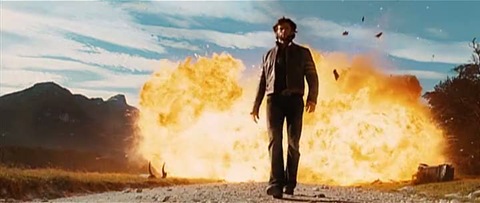
For instance, "Transformers: Dark of the Moon" isn't even in the top ten in the US in all-time gross - it's 18th. Worldwide? It sits up there at number 5 all-time. This isn't because foreign audiences are simplistic or anything, and marketing plays a big role, too, but giant robots that blow stuff up is more universal. Everyone knows what is going on, who the bad guys are, and what's at stake if the good guys lose (even if they never do). It's not something that gets lost amid the myriad of global cultures. Just look at some of our favourite anime works; "Spirited Away" was backed by Disney, won an Academy Award, and was Japan's highest grossing movie of all-time. America itself was seeing an animation renaissance from the likes of Pixar and Dreamworks. But it never did anything stateside, because a lot of the cultural values are somewhat Japanese. And oh yeah, "2012"? $166 million in the US (181st all-time). Worldwide it did over $600 million (37th all-time).
This explains the rehash of foreign films, too. American production companies often seek to "globalize" foreign films that they get their hands on, in an effort, once again, to appeal to a larger market.
There's way, way more egregious cockblocking that studios do with regards to movies, and many of the other problems are terrifyingly worse. Want to know why the indie movie scene that every year is supposed to "take off" or "revolutionize" film never happens? Why the end of rehashes and commercialization and uncreative Hollywood never takes place? One major reason is how the studios rig the rating system. The MPAA is the largest studio lobbyist group, and oversees the ratings board and pays their salaries. The MPAA is funded by major studios and run by them, who then essentially run the "non-partisan" ratings board. Want to know why that creative and dark indie movie that flashed tits for five seconds got an NC-17, but big studio produced "Blood, Guts, Sex, and Fuck" skates by with an R rating even though it has a 20 minute bestiality scene that ended up in machete decapitation? It's because the studios want the studio made movie (the latter) to make the money, but not the indie movie that they have no ties to. So the creative and fresh indie movie gets an NC-17 and is never seen of nor heard of again, and "Blood, Guts, Sex, and Fuck" ends up delighting high school and college bachelors forever.
And then there is merchandising. Infact, just the other day me and a couple online buddies were discussing why Pixar made Cars 2 and not some new, witty, charming IP that they seem so good at.
Because toys!
Merchandise is a huge, huge part of the movie industry, as it brings in about $140 billion a year. Not only that, it provides a large profit margin for the studios, who don't have to advertise, make, ship, or oversee the toys (the toy company does that), but can charge a large licensing fee. And you wonder why there was a post-Episode 3 (but pre-episode 4) Han Solo action figure even before episodes 1-3 came out. Nobody ever said George Lucas doesn't love his money (admittedly, I owned the action figure, and it was pretty cool when I was growing up). Disney alone has made over $8 billion from Cars merchandise. Avatar, the highest grossing movie of all time, made "just" $2.7 billion from ticket sales.

So, what does this have to do with your question? Merchandise can build on two things; universality, and previous works. It is much easier to sell toys for an established franchise, and much easier to sell toys for a Michael Bay or James Cameron movie than a Jamin Winins one, especially when the former pair often has big robots, big explosions, and little clothing, all of which can connect with just about anyone.
What all of this means is that we all get to enjoy more of the same from Hollywood. One day when you're 80 years old, you can complain about not having 4D smell-o-vision in your Transformers movie like they will in 2070, or some such.
Sources used:
http://www.imdb.com (Top Grossing Films)
http://www.halloweenmovies.com/filmarchive/h1bts.htm
http://www.denofgeek.com/movies/243439/will_pixar_regret_making_up.html
http://www.wisegeek.com/what-is-a-spec-script.htm
http://www.wisegeek.com/what-is-movie-development.htm
http://www.hollywoodreporter.com/news/disney-cars-has-crossed-8-99438
Sunday, December 18, 2011
The ECB or: How I Learned to Stop Worrying and Love the Bonds
Lots of talk has been growing lately about the fate of the EU in the midst of by far its biggest economic crisis in its still short existence. Some have even gone so far as to say that the EU will collapse, that it was always going to collapse, or that it should be ditched, anyways.
The EU was and still remains a good idea. As a cultural achievement it is unique, and as a recipe for further cooperation and cultural ties, it remains potent. The economic problems of the European bloc are largely independent of the EU existing or not, with the only real drag being that countries like Greece can not affect their money, as they are tied to the Euro. Their debt issues, however, are not an EU cause and effect.
Monetary issues aside, the EU is not in its final throws or doomed to insolvency. The new "fiscal union" is still a bit wishy-washy but it's a definite step in the right direction.
One looming problem is France and Germany and how they have wrangled such control over the EU, with Central and Eastern European members publically complaining about their diminishing political role. Merkel and Germany want to bring in "Ordnung" and a more focused drive on austerity and low wage growth and such, and that's a fair suggestion, considering how America's systemic debt wreaked havoc on the economy, but with France and Germany offering the only two visions for the EU so far, and both of them being rather long term in nature, someone needs to step in and convince the investors and bond markets that in the short term, defaults/state bankruptcies aren't going to happen. The ECB needs to be fully involved at this point, but the Germans aren't letting them introduce cash into the system. Austerity is a good long term solution, but growth is the biggest issue right now, particularly in southern Europe. But with the UK - well, Cameron at least - continuing to want to be a footnote in Europe, there may not be any country that can offer a third option to Germany and France.
However, one of the root problems has been, and continues to be, the EU's low growth. This model of low growth, low consumption, low inflation, low unemployment, and low wage increase, is the model that Germany has followed and tried to push, but it's just not the best model to follow. This is why austerity isn't going to work right now, and why Germany's race to the bottom through trade surplus has been so damning to the EU.

Besides general reform to make the EU more efficient, less susceptible to corruption, etc., Germany needs to stop fighting the Eurobonds move, more bailout money needs to be offered to countries that require it to be kept afloat, and the ECB needs to be allowed to inflate the Euro. The lack of monetary flexibility and resistance to it is just throwing a wrench into the whole system. The problem is that individual countries inside the EU can't inflate or deflate their currency to meet economic needs, since they're all tied to the Euro. But if the ECB can't influence the Euro, then one of the most crucial elements on the table is gone.
Then, Germany just needs to give up its current economic trajectory. Low growth and siphoning wealth away from other countries via the trade surplus throws everyone under the bus, including Germany if the whole system fails.
China has already offered gobs of money to the EU, but has requested trade normalization, which the west, seeing China as the big bad boogey man, seems hesitant to do. But both the US and China have huge vested interests in the EU, particularly China, which, as an export based economy, needs that market to retain its (the EU) consumer spending. China is also trying to buy influence on an international stage; what better way then to help the EU with some money when needed? And while Germany is part of the problem, as I alluded to, they have the money and resources to help alleviate it.
Unfortunately, a lot of the conservative groups are switching this economic debate into a political one, and trying to limit the central bank, regulation, and labor laws. Those won't inherently fix the growth problem - see, the US. Monetary fixes and spending are what is needed to be done, which neither ideological base seems intent on. Sometimes, you have to bite the bullet. Hardcore, compromise-less ideology does not always work in politics. Did anyone in the US want to see tax money given to car companies? Not particularly, but the alternative was much worse. Same with the EU. Do we want to see the banks and governments get our money? No, not really. But more people don't want a severe depression, either.
The EU was and still remains a good idea. As a cultural achievement it is unique, and as a recipe for further cooperation and cultural ties, it remains potent. The economic problems of the European bloc are largely independent of the EU existing or not, with the only real drag being that countries like Greece can not affect their money, as they are tied to the Euro. Their debt issues, however, are not an EU cause and effect.
Monetary issues aside, the EU is not in its final throws or doomed to insolvency. The new "fiscal union" is still a bit wishy-washy but it's a definite step in the right direction.
One looming problem is France and Germany and how they have wrangled such control over the EU, with Central and Eastern European members publically complaining about their diminishing political role. Merkel and Germany want to bring in "Ordnung" and a more focused drive on austerity and low wage growth and such, and that's a fair suggestion, considering how America's systemic debt wreaked havoc on the economy, but with France and Germany offering the only two visions for the EU so far, and both of them being rather long term in nature, someone needs to step in and convince the investors and bond markets that in the short term, defaults/state bankruptcies aren't going to happen. The ECB needs to be fully involved at this point, but the Germans aren't letting them introduce cash into the system. Austerity is a good long term solution, but growth is the biggest issue right now, particularly in southern Europe. But with the UK - well, Cameron at least - continuing to want to be a footnote in Europe, there may not be any country that can offer a third option to Germany and France.
However, one of the root problems has been, and continues to be, the EU's low growth. This model of low growth, low consumption, low inflation, low unemployment, and low wage increase, is the model that Germany has followed and tried to push, but it's just not the best model to follow. This is why austerity isn't going to work right now, and why Germany's race to the bottom through trade surplus has been so damning to the EU.

Besides general reform to make the EU more efficient, less susceptible to corruption, etc., Germany needs to stop fighting the Eurobonds move, more bailout money needs to be offered to countries that require it to be kept afloat, and the ECB needs to be allowed to inflate the Euro. The lack of monetary flexibility and resistance to it is just throwing a wrench into the whole system. The problem is that individual countries inside the EU can't inflate or deflate their currency to meet economic needs, since they're all tied to the Euro. But if the ECB can't influence the Euro, then one of the most crucial elements on the table is gone.
Then, Germany just needs to give up its current economic trajectory. Low growth and siphoning wealth away from other countries via the trade surplus throws everyone under the bus, including Germany if the whole system fails.
China has already offered gobs of money to the EU, but has requested trade normalization, which the west, seeing China as the big bad boogey man, seems hesitant to do. But both the US and China have huge vested interests in the EU, particularly China, which, as an export based economy, needs that market to retain its (the EU) consumer spending. China is also trying to buy influence on an international stage; what better way then to help the EU with some money when needed? And while Germany is part of the problem, as I alluded to, they have the money and resources to help alleviate it.
Unfortunately, a lot of the conservative groups are switching this economic debate into a political one, and trying to limit the central bank, regulation, and labor laws. Those won't inherently fix the growth problem - see, the US. Monetary fixes and spending are what is needed to be done, which neither ideological base seems intent on. Sometimes, you have to bite the bullet. Hardcore, compromise-less ideology does not always work in politics. Did anyone in the US want to see tax money given to car companies? Not particularly, but the alternative was much worse. Same with the EU. Do we want to see the banks and governments get our money? No, not really. But more people don't want a severe depression, either.
Monday, October 24, 2011
Ar Tonelico: Melody of Elemia
Folks, I want to talk about Ar Tonelico. It's a somewhat niche JRPG series that is perhaps most well known for its risque material. The 3rd in particular (I have not played it yet) exaggerates the already ridiculous outfits and innuendo to the extreme, I am led to believe.
Yes, Ar Tonelico: Melody of Elemia (the first game in said series) is a borderline harem - although as of now it's "only" two girls. Yes, you install crystals into their bodies and it's made out like a sex scene - "be gentle when you put it in, it's my first time!" "it's bigger than I thought!" and other statements like that (and I am paraphrasing a bit). Yes, you dive into the girl's mind and look into their subconscious to power them up and get them costumes that enhance their magic. And yes, some of these costumes are revealing; one is a bath towel. That's it.
So on its face, I should not like this game. But, in all honesty, it is one of the more enjoyable games I have had in awhile.
Perhaps the most crucial thing this game does, considering its subject matter, is never take itself too seriously. It pokes fun at the various, sometimes seemingly Japanese, tropes that it revels in. It's never super serious, dark, or gritty, and there's a sense of comedy and light-heartedness that let's you know that this game should not be taken seriously, as the creators probably didn't either. It feels like one big guilty pleasure they made, and we get to enjoy it. When one character leaves the party for a bit and is replaced by a much more buxom, yet totally different looking gal, another party member, not aware of the change, simply believes that the first gal grew tits - and yells outloud asmuch. Nobody in real life would confuse the two women, but hey, let's get the word "tits" in here somehow, right? But for all the borderline objectification of women here, mostly by way of their clothing and pandering to our main, male protagonist, they are far from weak and helpless. Many of them have survived in roles of leadership, individual living, dangerous conditions, and/or other such perilous terms. And the main character females, the Reyatails who augment your party with song magic, are the most powerful characters in the game- no contest.
It's this sort of give-and-take that goes so well. The main protagonist is a bit of a naive guy; pleading innocence at the overt sexual dialogue that occurs. He's also a bit of a social klutz. But not so much that he becomes a caricature or a trope; indeed, I hesitate to use that phrase because he is also, quite simply, a very nice and caring guy, too. And yes, he has a big sword and somewhat spiky hair.
What really sets this game apart though is that on the rare occasions that it does get serious, it does so strikingly well. In one scene, our female Reyatail Misha is divulging some personal information. Throughout life, she appeared boisterous and confident, and exuded a sort of cocky and self-assured charm. However, it was all a projection of sorts to try to bury her inner-fears and self-doubt from a demanding past. No, this is not literary revolution. But it's handled well, and without melodrama or overwhelming angst in-game, which is more than about 90% of video games can say.
The battle system itself is very complex, potentially, but it does not utilize itself fully because the battles themselves are relatively easy. Between attacks, song magic, skills, blocking, harmonics, and various gauges to fill, there's a lot to do, but most battles boil down to; attack with frontline characters, wait for Reyatail to charge up Song Magic, and once charged, use powerful magic to one-hit the opposing team. Only in the elongated boss battles can things get a bit more complex, but even still, I am now about 18 hours into the game and on segment 2 of the story, and I have yet to have a party wipe.
There is, though, a metric ton of customization to do. There are weapons; all of which can be augmented, and the same can be done with armor. Magic can be augmented, as well as the song magic; as with the weapons, it is done through the use of crystals that can change their effects and such. Items of all kinds; from consumables to equipment and everything in between, can be created/crafted. Old items can be broken down into crystals to use for all of the augmentation. There is a lot of tweaking and customizing of characters to be had.
Another thing that Ar Tonelico gets some props for is the music. And it is absolutely deserved. The haunting, Ghost in the Shell reminiscent opening is wonderful, and the music runs the gamut from serene and peaceful, to fast-paced rap for battles. It's a wonderful soundtrack. The voice acting, too, is respectable, although some of the creature characters are a bit annoying. The main characters feature the likes of Vic Mignogna and other well-traveled VAs.
I still have a ways to go in the first game in the series, and we'll see how far I get into games two and three. But so far, the overt sexism is minimal, the humour and self-awareness the game displays in regards to its level of ridiculousness is great, and the actual gameplay elements are quite enjoyable. Colour me surprised for now, but pleasantly so, as I have put more time into this game than I have into a video game in quite awhile.
Yes, Ar Tonelico: Melody of Elemia (the first game in said series) is a borderline harem - although as of now it's "only" two girls. Yes, you install crystals into their bodies and it's made out like a sex scene - "be gentle when you put it in, it's my first time!" "it's bigger than I thought!" and other statements like that (and I am paraphrasing a bit). Yes, you dive into the girl's mind and look into their subconscious to power them up and get them costumes that enhance their magic. And yes, some of these costumes are revealing; one is a bath towel. That's it.
So on its face, I should not like this game. But, in all honesty, it is one of the more enjoyable games I have had in awhile.
Perhaps the most crucial thing this game does, considering its subject matter, is never take itself too seriously. It pokes fun at the various, sometimes seemingly Japanese, tropes that it revels in. It's never super serious, dark, or gritty, and there's a sense of comedy and light-heartedness that let's you know that this game should not be taken seriously, as the creators probably didn't either. It feels like one big guilty pleasure they made, and we get to enjoy it. When one character leaves the party for a bit and is replaced by a much more buxom, yet totally different looking gal, another party member, not aware of the change, simply believes that the first gal grew tits - and yells outloud asmuch. Nobody in real life would confuse the two women, but hey, let's get the word "tits" in here somehow, right? But for all the borderline objectification of women here, mostly by way of their clothing and pandering to our main, male protagonist, they are far from weak and helpless. Many of them have survived in roles of leadership, individual living, dangerous conditions, and/or other such perilous terms. And the main character females, the Reyatails who augment your party with song magic, are the most powerful characters in the game- no contest.
It's this sort of give-and-take that goes so well. The main protagonist is a bit of a naive guy; pleading innocence at the overt sexual dialogue that occurs. He's also a bit of a social klutz. But not so much that he becomes a caricature or a trope; indeed, I hesitate to use that phrase because he is also, quite simply, a very nice and caring guy, too. And yes, he has a big sword and somewhat spiky hair.
What really sets this game apart though is that on the rare occasions that it does get serious, it does so strikingly well. In one scene, our female Reyatail Misha is divulging some personal information. Throughout life, she appeared boisterous and confident, and exuded a sort of cocky and self-assured charm. However, it was all a projection of sorts to try to bury her inner-fears and self-doubt from a demanding past. No, this is not literary revolution. But it's handled well, and without melodrama or overwhelming angst in-game, which is more than about 90% of video games can say.
The battle system itself is very complex, potentially, but it does not utilize itself fully because the battles themselves are relatively easy. Between attacks, song magic, skills, blocking, harmonics, and various gauges to fill, there's a lot to do, but most battles boil down to; attack with frontline characters, wait for Reyatail to charge up Song Magic, and once charged, use powerful magic to one-hit the opposing team. Only in the elongated boss battles can things get a bit more complex, but even still, I am now about 18 hours into the game and on segment 2 of the story, and I have yet to have a party wipe.
There is, though, a metric ton of customization to do. There are weapons; all of which can be augmented, and the same can be done with armor. Magic can be augmented, as well as the song magic; as with the weapons, it is done through the use of crystals that can change their effects and such. Items of all kinds; from consumables to equipment and everything in between, can be created/crafted. Old items can be broken down into crystals to use for all of the augmentation. There is a lot of tweaking and customizing of characters to be had.
Another thing that Ar Tonelico gets some props for is the music. And it is absolutely deserved. The haunting, Ghost in the Shell reminiscent opening is wonderful, and the music runs the gamut from serene and peaceful, to fast-paced rap for battles. It's a wonderful soundtrack. The voice acting, too, is respectable, although some of the creature characters are a bit annoying. The main characters feature the likes of Vic Mignogna and other well-traveled VAs.
I still have a ways to go in the first game in the series, and we'll see how far I get into games two and three. But so far, the overt sexism is minimal, the humour and self-awareness the game displays in regards to its level of ridiculousness is great, and the actual gameplay elements are quite enjoyable. Colour me surprised for now, but pleasantly so, as I have put more time into this game than I have into a video game in quite awhile.
Subscribe to:
Posts (Atom)